


Practical Support for Church Wardens
Built around your building.
Caring for a church building is a real responsibility, often carried by volunteers without a building background. This hub brings together practical, plain-English tools — developed alongside our work providing aerial intelligence for churchwardens and PCCs across the UK.
Looking After a Church Building is Harder Than It Should Be
Most church wardens are volunteers, not building professionals — yet they carry legal responsibility for a structure that's often centuries old, complex, and hard to access safely. The quinquennial inspection gives a snapshot every five years, but a great deal can happen to a roof, tower or gutter in between. High-level areas are the hardest to see and the most likely to cause expensive, escalating damage if a problem goes unnoticed.
This hub exists to close that gap — with resources that help you see more, understand more, and act sooner, without needing scaffolding or specialist training to get started.
£1.2m
Avoidable cost added by delayed repairs across 30 surveyed churches
Historic England 2019
16x
Cost increase on a single gutter repair left five years too long £1k -£20k
Historic England 2019
39%
Of Churches now report their roof at risk or in urgent need of repair.
National Churches Survey 2025
Built from Evidence, Not Guesswork
Every resource in this hub comes from the same place: what we consistently see inspecting church roofs, towers and spires across the UK, cross-checked against published research from Historic England, the National Churches Trust and the Met Office. We're not building generic content — we're documenting the specific failure patterns, inspection gaps and evidence PCCs and DACs actually need, based on real fabric we've inspected and the sources we cite throughout.
This matters because the people who rely on this hub carry real legal responsibility for buildings they were never trained to assess. Our role isn't to replace your quinquennial inspector, your architect or your DAC — it's to give you clearer sight of your building between those formal moments, and the evidence to make your case for repair when it counts.

Free Guides & Tools for Church Wardens and PCC's
Download what's useful to you now, or work through the hub in order — from understanding risk, to planning and budgeting, to preparing for your next inspection.
Zone A -
Understand Your Risk
Most fabric problems don't start as emergencies — they start as small, unnoticed changes at height: a slipped tile, a blocked gutter, a hairline crack that widens over a wet winter. This zone gives you a structured way to look for those changes from the ground, and a clear line on where informal checking should stop and professional access begins.

Church Roof Guide
A usable, structured template to help identify visible and hidden roof risks on your church.

Fabric Checklist
A usable template that helps capture fabric condition of building. Can be used on personal devices and tablets.

Zone B -
Plan and Budget
Knowing something needs fixing is only half the problem — the other half is making the case to a PCC that's balancing a dozen priorities on a volunteer budget. This zone covers what deferred maintenance actually costs over time, and gives you a template for turning a fabric concern into a proposal your committee can act on.
Coming Soon
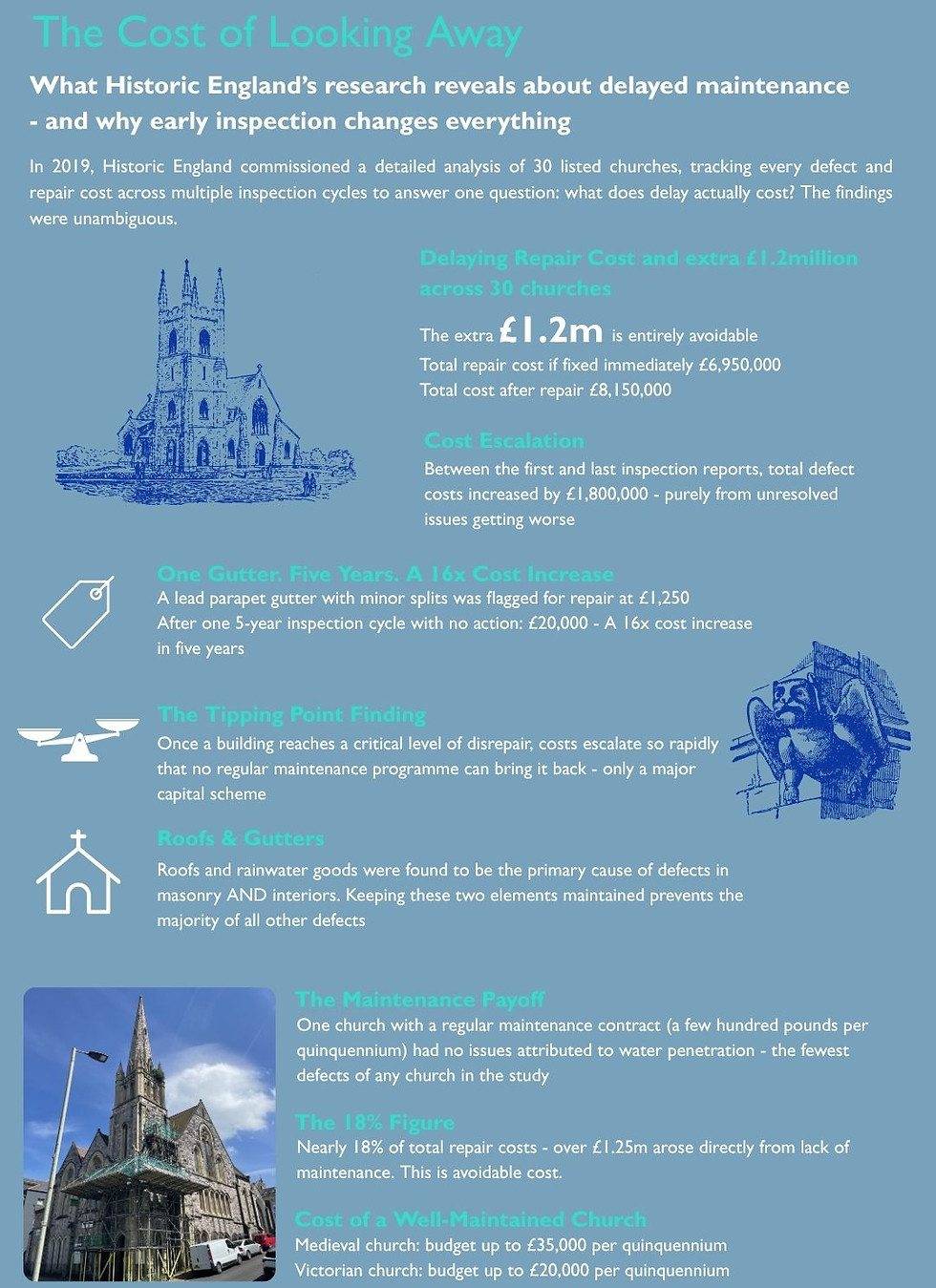
The Cost of Looking Away
What a major research project revealed about the true cost of delayed maintenance and its impact.

PCC Briefing Template
A useful ready to use briefing template to bring your next fabric proposal to committee.

Coming Soon
Plan routine maintenance and major repairs across a multi-year cycle.
Zone C
Prepare for Inspection
A quinquennial inspection is only as useful as the access and information your inspector has on the day. This zone helps you prepare — so your inspector's time (and your budget) goes further, and so what your DAC receives back is clear, evidenced and ready to act on.
Coming Soon
Coming Soon
Coming Soon
Coming Soon
Coming Soon
Get your church ready so your inspector's time - and your budget - go further.
Coming Soon
What your Diocesan Advisory Committee actually wants to see, and how to provide it.
Coming Soon
Quinquennial inspection,how to get the most from your inspector's visit.
Zone D
Ongoing Peace of Mind
Why the five-year inspection cycle needs a safe way to check in between.
Coming Soon

Climate Change & Historic Buildings
Headline evidence on why climate change is changing what 'Ongoing Care' needs to mean for your building. A one pager for a meeting or overview.

Climate Risk Briefing for Historic Buildings
This document provides heritage custodians, with the tools and insights in the practical management of increasing climate challenges.
Coming Soon
Maintaining and developing historical data from inspection images and the value of them.
Developed Alongside Our Work with Church Buildings

Three Weave provides aerial inspection and visual intelligence for heritage buildings across the UK, including church roofs, towers and spires. Everything in this hub is built from what we consistently see in that work — the areas that get missed, the evidence PCCs and DACs actually need, and the questions wardens ask us most.
We're not the ones repairing your roof or approving your faculty application. Our role is to help you, your PCC and your professional advisers see clearly what's happening at height — safely, and without the cost or disruption of scaffolding — so decisions can be made with confidence.
We are licensed and fully insured operators, regulated under CAA rules for commercial drone operations.
Professional Governance
Three Weave operates as a professionally managed commercial drone service, holding UK Civil Aviation Authority registration, specialist drone insurance, through Coverdrone and membership of FPV UK.
Every inspection is undertaken within a documented operational framework that prioritises, safety, regulatory compliance and reporting consistency.

.png)

How it Works

UNDERSTAND
Assess what you can from the ground, decide whether you need a professional view of your building.

INSPECT
If a closer look is required we carry out a non invasive inspection, with no disruption often taking less than 2 hours.

ACT
We provide you with detailed evidence that you can use to determine maintenance needs and share with stakeholders.


Important Information
Three Weave provides aerial inspection and visual intelligence services only and does not undertake formal surveys, structural assessments, or quinquennial inspections. The resources on this page are intended to support early-stage risk identification, PCC decision-making and inspection preparation. Professional advice should always be sought from your quinquennial inspector, architect, or Diocesan Advisory Committee where required.